A practical guide to reading a herbal supplement label: botanical names, plant parts, extracts, other ingredients, directions and warnings, with a worked example.

Quick answer: A good herbal supplement label names each plant by its botanical (Latin) name, says which part and form is used, lists other ingredients, gives clear directions and states who should not use it. If a label cannot tell you these things, ask the seller or choose another product.
Last updated: 12 October 2026
At a glance
- Botanical name: two Latin words, such as Zingiber officinale
- Plant part and form: root, fruit, seed, powder or extract
- Other ingredients: excipients, fillers and allergens
- Warnings: who should not use it and when to stop
1. Botanical (Latin) names
Common names vary between countries, so reputable labels give the botanical name. It has two parts, the genus and the species. For example, ginger is Zingiber officinale, amla is Phyllanthus emblica, black seed is Nigella sativa and milk thistle is Silybum marianum. Our guides to ginger, amla and milk thistle explain each one.
2. Plant part and form
The label should say if the product uses the root, fruit, seed or bark, and whether it is a powder or an extract. An extract can be much more concentrated than the whole plant, so the amount and the form matter.
3. Other ingredients
Look for “other ingredients” or excipients, such as capsule shell materials and fillers, and for any allergens. If you have an allergy or follow a vegan diet, check these carefully.
4. Directions and duration
The label should say how much to take, how often, and for how long. Never exceed the dose, and be careful with stimulant plants, which are intended for short-term use. See aloe and cascara sagrada in herbal supplements.
5. Warnings and who should not use it
Look for guidance on children, pregnancy, breastfeeding, medication and medical conditions. The NHS says to check with a pharmacist before taking a herbal medicine if you take other medicines, and not to buy unlicensed herbal medicines online. Read more in Can I take herbal supplements with my medication?.
6. Registration marks
Some herbal products are registered as traditional herbal medicines and carry a THR mark or number, as explained by GOV.UK. Others are sold as food supplements, so there is no THR mark. See What is a herbal digestive supplement?.
A worked example
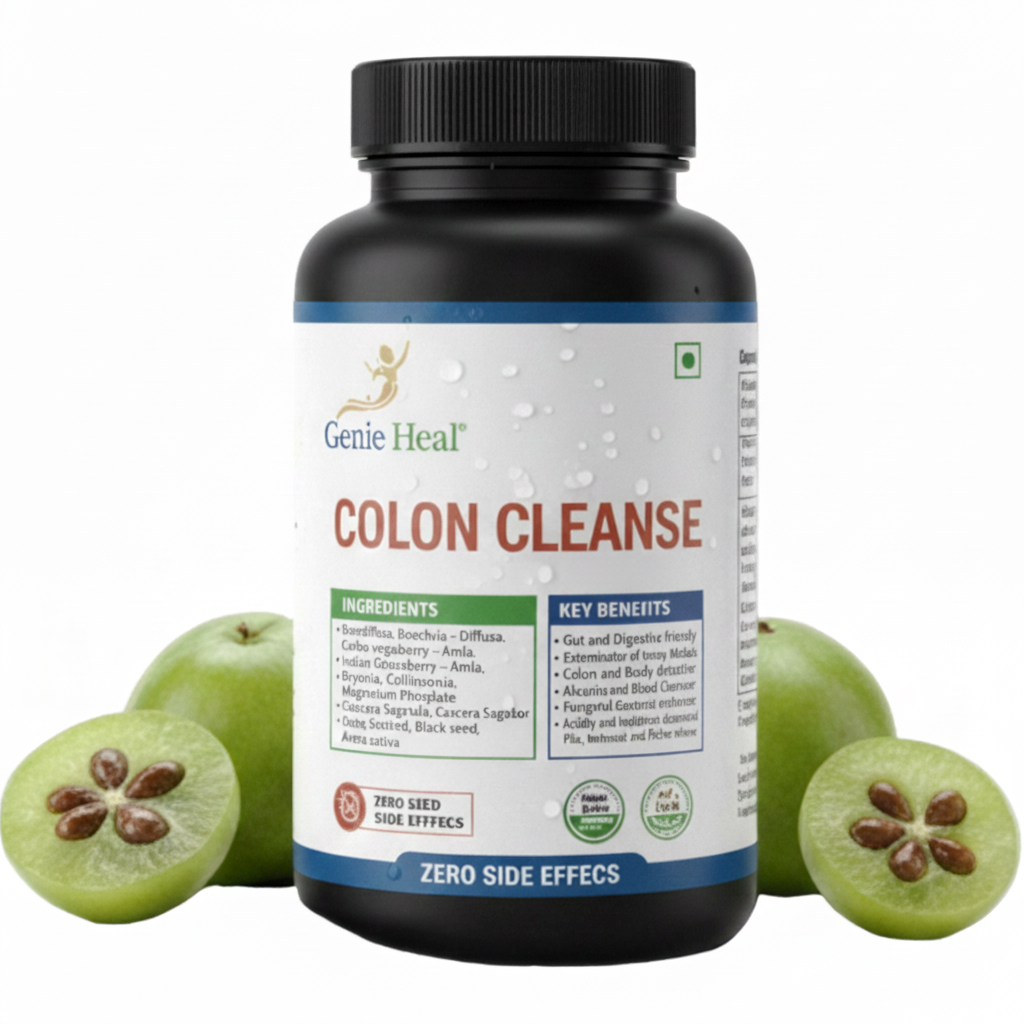
The ingredient list for GenieHeal Colon Cleanse includes Zingiber Officinale (Ginger), Indian Gooseberry (Amla), Terminalia Chebula, Black Seed, Aloe Socotrina and Cascara Sagrada, among others. A careful reader would look up each botanical name, notice that Aloe and Cascara Sagrada are stimulant plants, and then follow the directions on the label and speak to a pharmacist if unsure. Our 9-point checklist walks through the same steps.
Frequently asked questions
Why do labels use Latin names?
Common names differ between places, while the botanical name identifies the exact plant.
What are excipients?
Other ingredients that are not the active herb, such as fillers and capsule materials.
What does THR mean?
Traditional herbal registration, a UK scheme for herbal medicines based on long-standing use.
What should I do if a label is unclear?
Ask the seller for details, or choose another product.
Sources
- NHS: Herbal medicines and complementary therapies
- GOV.UK: Apply for a traditional herbal registration (THR)
Keep reading
- How to choose a herbal colon cleanse supplement
- What is ginger?
- What is a herbal digestive supplement?
Browse all GenieHeal herbal food supplements, learn about GenieHeal, or contact our team.
GenieHeal products are food supplements, not medicines. They are not intended to diagnose, treat, cure or prevent any disease, and they should not replace a varied, balanced diet or medical advice. This article is general information, not medical advice. If you are worried about your health, speak to your GP or pharmacist.

GenieHeal
Questions about a product? Email info@genieheal.com.