What amla is, how it is used in Ayurvedic tradition, what the research says, safety points and how it appears in herbal supplements.

Quick answer: Amla, also called Indian gooseberry, is the sour fruit of Phyllanthus emblica, long used in Ayurvedic cooking and herbal preparations. Research is mostly early-stage, and experts say there is not enough evidence to say which forms or doses are best, so supplements should be treated as optional.
Last updated: 8 October 2026
At a glance
- Other names: Indian gooseberry, amalaki, Emblica officinalis
- Traditional use: Ayurvedic cooking and herbal preparations, including triphala
- Evidence: mostly lab and animal studies, with mixed human results
- Safety: limited data in pregnancy and breastfeeding, so ask a professional
What is amla?
Amla is the fruit of the tree Phyllanthus emblica, also known by the older name Emblica officinalis. It is a small, sour, green fruit native to parts of Asia. In Sanskrit it is called amalaki, and it appears throughout Ayurvedic tradition.
How is amla used traditionally?
A review of amla notes that it is widely used in Ayurveda, including in the herbal recipe Chyavanaprasha and, together with two other myrobalan fruits, in triphala. It is also eaten as a food in parts of Asia, for example in some regional dishes such as dal. Many herbal supplements use amla as fruit powder or powder-filled capsules.
What does the research say?
Laboratory reviews, such as this 2016 review in Pharmacological Research, describe a rich mix of plant compounds including flavonoids and tannins, and many preclinical studies. Human evidence is thinner and mixed. GoodRx, summarising the literature, notes that in one study amla did not lower blood sugar in people with diabetes, and that there is not enough evidence to say what forms and doses are best. That is why GenieHeal does not claim that amla, or any product containing it, treats or improves a condition.
Safety points
- There is limited safety information for pregnancy and breastfeeding, so avoid unless a doctor advises otherwise.
- If you take medicines or have a medical condition, ask your pharmacist or doctor before using amla supplements.
- Choose products with a full ingredient list and clear directions.
Healthline also advises avoiding amla supplements in pregnancy and breastfeeding because of the lack of safety evidence.
Amla in GenieHeal Colon Cleanse
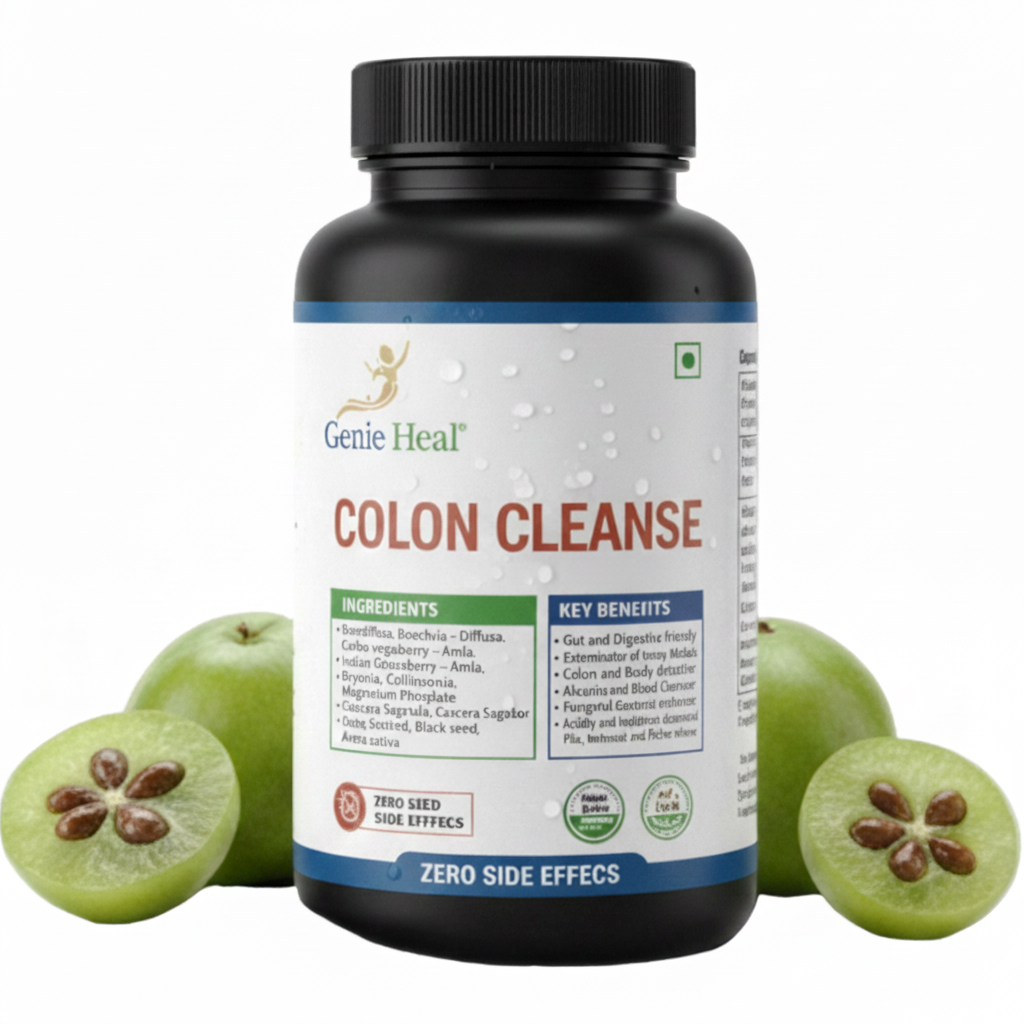
Indian Gooseberry (Amla) is one of the ingredients in GenieHeal Colon Cleanse, listed alongside Ginger, Black Seed and Terminalia Chebula, which is the other myrobalan fruit used in triphala. The capsule is a plant-based herbal food supplement for adults aged 18 and over, taken once a week for one month. See the full list in our ingredients guide.
Frequently asked questions
What is amla?
The sour fruit of Phyllanthus emblica, also called Indian gooseberry, used in Ayurvedic cooking and herbal preparations.
Is amla the same as Indian gooseberry?
Yes. Amla and Indian gooseberry are the same fruit, also called amalaki.
Is amla safe?
It is eaten as a food in parts of Asia, but safety data for supplements is limited, especially in pregnancy and breastfeeding. Ask a professional if unsure.
Does amla have proven health benefits?
Many studies are early-stage, and experts say there is not enough evidence on the best forms or doses, so no benefits are claimed here.
Sources
- PubMed: Emblica officinalis (Amla): a review (Pharmacological Research, 2016)
- WHO IMSEAR: Phytochemistry, traditional uses and cancer chemopreventive activity of Amla
- GoodRx: Amla (Indian gooseberry) benefits
- Healthline: Indian gooseberry
Keep reading
- Colon Cleanse guide: ingredients and routine
- How to choose a herbal colon cleanse supplement
- What is shilajit? Research, safety and how to choose
Browse all GenieHeal herbal food supplements, learn about GenieHeal, or contact our team.
GenieHeal products are food supplements, not medicines. They are not intended to diagnose, treat, cure or prevent any disease, and they should not replace a varied, balanced diet or medical advice. This article is general information, not medical advice. If you are worried about your health, speak to your GP or pharmacist.

GenieHeal
Questions about a product? Email info@genieheal.com.