What ginger is, how it is used traditionally, what the research says about nausea, safety points and how it appears in herbal supplements.

Quick answer: Ginger is the root of Zingiber officinale, used for centuries as a food and in traditional herbal preparations. Research has looked mainly at nausea, but it is not a cure-all, and concentrated supplements can interact with some medicines, so it is worth asking a pharmacist if you are unsure.
Last updated: 12 October 2026
At a glance
- Latin name: Zingiber officinale
- Traditional use: cooking, teas and herbal preparations
- Best-studied area: nausea and vomiting
- Take care: blood thinners, surgery and pregnancy
What is ginger?
Ginger is the underground stem, or rhizome, of Zingiber officinale, a plant native to Southeast Asia and now grown widely. It is used fresh, dried, powdered, as juice, in teas and in capsules. According to the US National Center for Complementary and Integrative Health (NCCIH), ginger is currently promoted for nausea and vomiting, osteoarthritis, menstrual cramps and other conditions.
What does the research say?
NCCIH notes that ginger has been studied for several types of nausea and vomiting, and that research shows it may be helpful for nausea and vomiting associated with pregnancy. For many other promoted uses the evidence is weaker or mixed. For that reason GenieHeal does not claim that ginger, or any product containing it, treats a condition.
Food ginger and supplements
Ginger in meals is different from concentrated products. Capsules, extracts and strong powders deliver more ginger in one go, so they have a greater chance of side effects or interactions than a little fresh ginger in your cooking. If you are choosing a supplement, read the label for the amount and the form.
Safety points
- Bleeding risk: Breastcancer.org advises that ginger may increase the risk of bleeding, so it should not be taken in the seven days before or after surgery, and people with a bleeding disorder or on blood thinners should check first.
- Pregnancy: NCCIH says to consult your health care provider before using ginger while pregnant.
- Medicines: tell your doctor or pharmacist about any supplement you take. Read more in Can I take herbal supplements with my medication?.
Ginger in GenieHeal Colon Cleanse
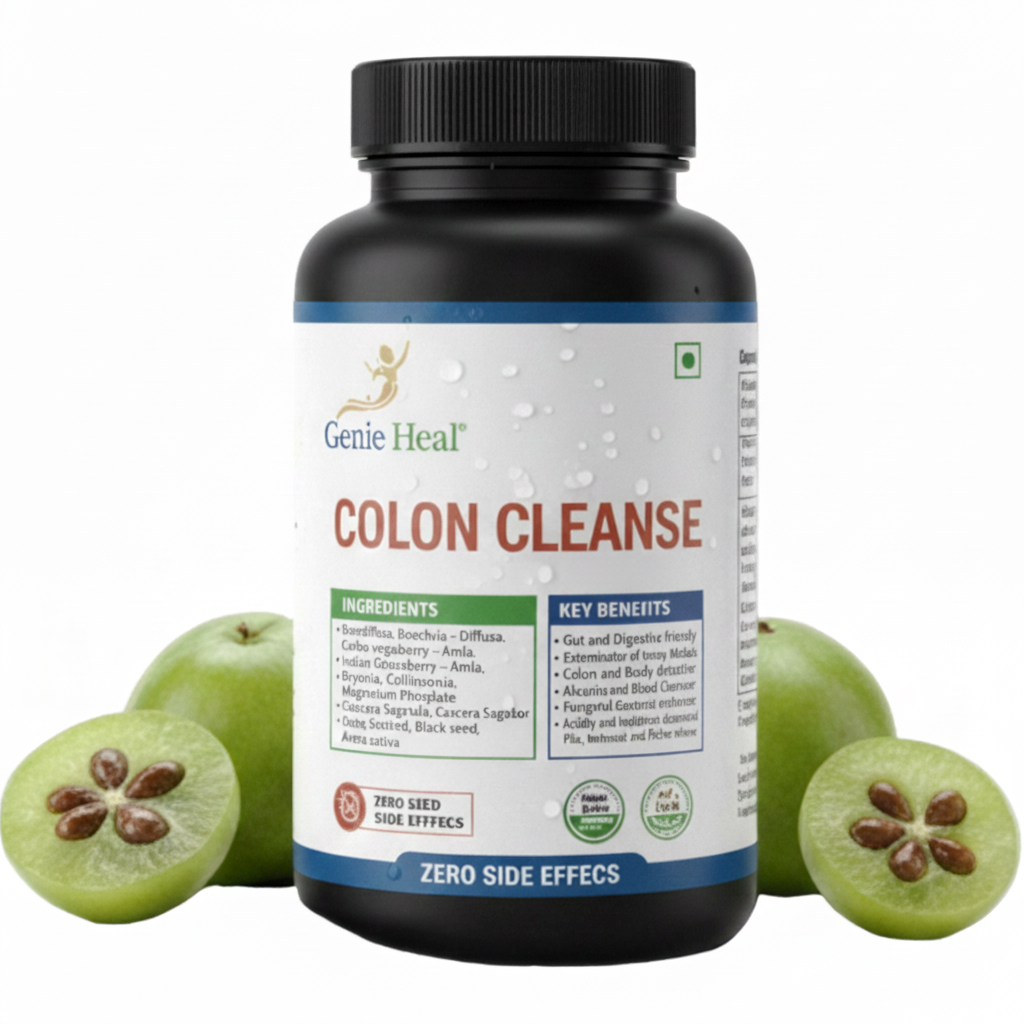
Zingiber Officinale (Ginger) is one of the ingredients in GenieHeal Colon Cleanse, alongside Amla, Black Seed and Terminalia Chebula. It is a plant-based herbal food supplement for adults aged 18 and over, taken once a week for one month. See the whole list in our ingredients guide, and read about amla, another ingredient in the blend.
Frequently asked questions
What is ginger?
The rhizome of Zingiber officinale, used as a food, spice and traditional herbal ingredient.
Is ginger proven to help nausea?
Research suggests it may help some types of nausea, including nausea in pregnancy. Evidence for other uses is weaker.
Is ginger safe with blood thinners?
Check with a pharmacist or doctor first, because ginger may increase bleeding risk.
Can I take ginger supplements when pregnant?
Speak to your health care provider first, as NCCIH advises.
Sources
Keep reading
- What is amla (Indian gooseberry)?
- Colon Cleanse guide: ingredients and routine
- Can I take herbal supplements with my medication?
Browse all GenieHeal herbal food supplements, learn about GenieHeal, or contact our team.
GenieHeal products are food supplements, not medicines. They are not intended to diagnose, treat, cure or prevent any disease, and they should not replace a varied, balanced diet or medical advice. This article is general information, not medical advice. If you are worried about your health, speak to your GP or pharmacist.

GenieHeal
Questions about a product? Email info@genieheal.com.