Practical, everyday ways to eat more fibre, with 12 simple swaps, a gentle way to increase your intake and why fluid matters.

Quick answer: Add fibre in small steps across the day: swap refined foods for higher-fibre versions, add beans and lentils, keep skins on fruit and potatoes, and drink more fluid as you go. NHS advice for adults is about 30 g of fibre a day.
Last updated: 8 October 2026
At a glance
- Target: about 30 g a day for adults (NHS)
- Method: swap and add, do not overhaul
- Pace: build up over a couple of weeks
- Partner habit: drink more fluid as fibre goes up
Why small swaps work
The NHS recommends that adults aim for about 30 g of fibre a day, and many people eat less. Rather than a big diet change, a few easy swaps repeated every day can close the gap. We explain the science in Why is fibre important for digestive wellbeing?.
12 easy swaps and additions
- Choose wholemeal, granary or seeded bread instead of white.
- Have porridge or a wholegrain breakfast cereal instead of a refined one.
- Swap white rice or pasta for brown or wholewheat, or mix half and half to start.
- Keep the skin on potatoes, including jacket potatoes.
- Add beans, lentils or chickpeas to soups, stews, curries and salads.
- Fill half your plate with vegetables, fresh, frozen or tinned.
- Snack on fruit with the skin on, such as apples and pears.
- Choose nuts or seeds instead of crisps.
- Use wholegrain crackers or oatcakes instead of refined biscuits.
- Stir frozen berries or chopped fruit into porridge or yoghurt.
- Add a spoonful of seeds, such as flax or sunflower, to cereal or salad.
- Check the label: foods with 6 g or more of fibre per 100 g are high in fibre.
A gentle way to build up
NHS hospital leaflets such as the Blackpool Teaching Hospitals fibre leaflet advise increasing fibre gradually. Adding a lot at once can cause wind, bloating and discomfort. Try one new swap every few days, spread fibre across meals rather than loading one meal, and give your gut a couple of weeks to adjust.
Do not forget the fluid
Fibre works best with plenty of fluid. The Bradford District Care leaflet says most adults need 1.5 to 2 litres of water-based drinks a day, and you may need more as you eat more fibre. Read more in How does hydration support digestive health?.
When to take advice
If you have irritable bowel syndrome, diverticulitis, inflammatory bowel disease, loose stools or have had bowel surgery, the best type and amount of fibre may be different for you, so speak to your doctor or a dietitian. The UHCW dietetics leaflet on constipation also advises seeing your doctor if you have a lasting change in bowel habit.
A note on supplements
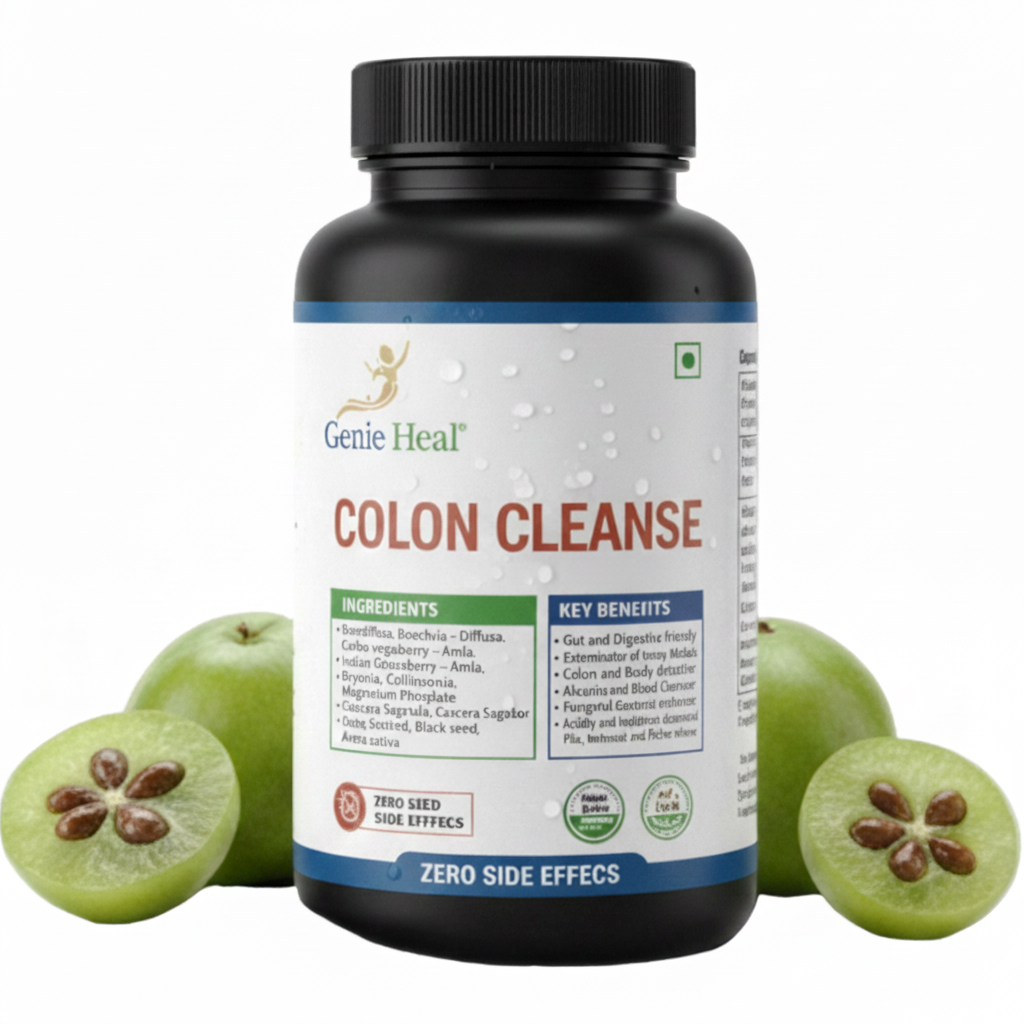
Herbal capsules are not a source of dietary fibre. If you are thinking about a product like GenieHeal Colon Cleanse, treat it as an optional extra, not a substitute for a fibre-rich diet. Our checklist for choosing a supplement explains what to look for.
Frequently asked questions
What is the easiest way to get more fibre?
Make small swaps: wholemeal bread, brown rice or pasta, beans or lentils in meals, fruit and vegetables with every meal, and keep skins on.
How much fibre should I eat?
NHS advice for adults is about 30 g a day.
Why do I get bloated when I eat more fibre?
Adding fibre too fast can cause wind and bloating. Build up gradually and drink more fluid.
Do I need a supplement to get enough fibre?
Not usually. Aim for fibre-rich foods first, and speak to a dietitian if you struggle.
Sources
- NHS: How to get more fibre into your diet
- Blackpool Teaching Hospitals NHS Foundation Trust: fibre patient leaflet
- Bradford District Care NHS Foundation Trust: healthy diet and dietary fibre
- University Hospitals Coventry and Warwickshire NHS Trust: constipation
Keep reading
- Why is fibre important for digestive wellbeing?
- How can I support my digestive health naturally?
- Why do I feel bloated? Common causes and when to see a GP
Browse all GenieHeal herbal food supplements, learn about GenieHeal, or contact our team.
GenieHeal products are food supplements, not medicines. They are not intended to diagnose, treat, cure or prevent any disease, and they should not replace a varied, balanced diet or medical advice. This article is general information, not medical advice. If you are worried about your health, speak to your GP or pharmacist.

GenieHeal
Questions about a product? Email info@genieheal.com.