How much fluid NHS guidance suggests, why fibre needs fluid, which drinks count, and simple ways to drink enough.

Quick answer: Fibre needs fluid to do its job. NHS Eatwell guidance suggests 6 to 8 glasses or cups of fluid a day for most adults, and some NHS bowel leaflets suggest 1.5 to 2 litres, especially when you are working on constipation or eating more fibre.
Last updated: 8 October 2026
At a glance
- General NHS advice: 6 to 8 glasses or cups of fluid a day
- Bowel leaflets: around 1.5 to 2 litres a day
- Drinks that count: water, lower-fat milk, tea, coffee and sugar-free drinks
- Easy check: pale urine is a good sign
Why fluid matters for your bowel
The gut and the bowel work with water. NHS hospital leaflets say that when you eat more fibre you also need to drink more, because fibre without enough fluid can make constipation worse. The Bradford District Care leaflet says most adults need 1.5 to 2 litres of water-based drinks a day. Our guide to why fibre is important explains how the two work together.
How much should you drink?
NHS Eatwell guidance, as shown by NHS Wales, is to aim for 6 to 8 glasses of fluid a day. Water, lower-fat milk and sugar-free drinks including tea and coffee all count. Fruit juice and smoothies count too, but because of their sugar the advice is to limit them to a combined total of 150 ml a day. You need more fluid when the weather is warm or when you are active. A Royal Berkshire NHS leaflet suggests 1.5 to 2 litres a day for bowel health.
Which drinks count?
- Count: water, lower-fat milk, sugar-free drinks, tea and coffee.
- Count, in small amounts: fruit juice and smoothies.
- Go easy: sugary fizzy drinks and alcohol.
The Royal Berkshire leaflet also notes that caffeine stimulates bowel movements, so some people find that tea and coffee affect them.
A simple way to check
Look at the colour of your urine. Pale yellow suggests you are drinking enough, and darker urine suggests you may need more. If you have a heart, kidney or other condition and a doctor has set a fluid limit, always follow their advice.
Easy ways to drink enough
- Start the day with a glass of water.
- Keep a bottle or jug where you can see it.
- Have a drink with each meal and snack.
- Eat water-rich foods such as cucumber, melon and strawberries.
- Drink a little more when it is hot or you are active.
Hydration and supplements
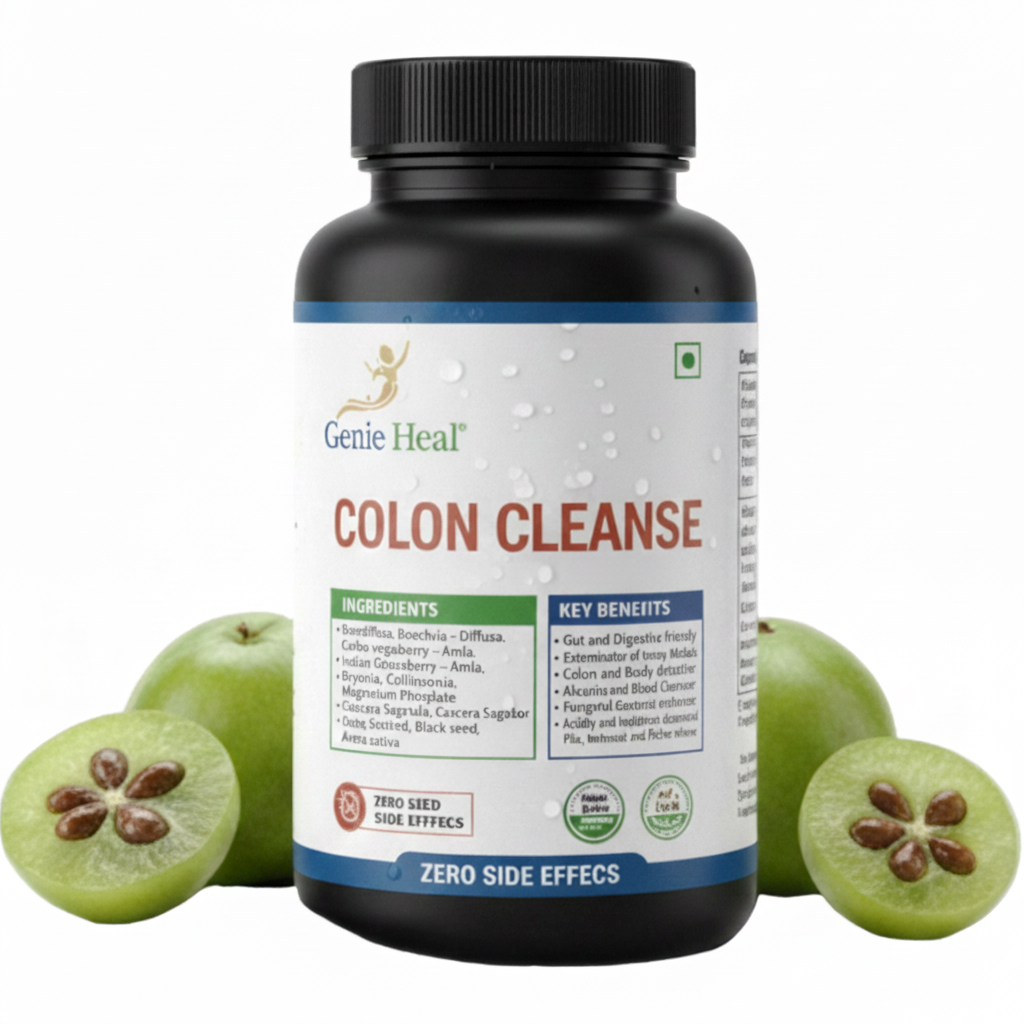
Herbal supplements do not replace fluids. If you use a product such as GenieHeal Colon Cleanse, the directions say to drink plenty of fluids while using it. See our once-weekly routine guide for the full directions.
Frequently asked questions
How much water should I drink a day?
NHS Eatwell guidance suggests 6 to 8 glasses of fluid a day, and some NHS bowel leaflets suggest 1.5 to 2 litres. You need more in warm weather or when you are active.
Does coffee count as fluid?
Yes. Tea and coffee count towards your fluid intake, although caffeine can stimulate the bowel in some people.
Why does fibre need water?
Fibre absorbs water in the gut. Without enough fluid, extra fibre can make constipation worse.
Can you drink too much?
Drinking far more than you need is not helpful. Aim for pale urine and follow any advice from your doctor.
Sources
- NHS Wales (Betsi Cadwaladr University Health Board): Eatwell guide, fluids
- Royal Berkshire NHS Foundation Trust: how can I look after my bowel?
- Bradford District Care NHS Foundation Trust: healthy diet and dietary fibre
Keep reading
- How can I support my digestive health naturally?
- Why is fibre important for digestive wellbeing?
- How to use GenieHeal Colon Cleanse: a once-weekly routine
Browse all GenieHeal herbal food supplements, learn about GenieHeal, or contact our team.
GenieHeal products are food supplements, not medicines. They are not intended to diagnose, treat, cure or prevent any disease, and they should not replace a varied, balanced diet or medical advice. This article is general information, not medical advice. If you are worried about your health, speak to your GP or pharmacist.

GenieHeal
Questions about a product? Email info@genieheal.com.