A practical checklist for choosing a herbal colon cleanse supplement in the UK: ingredients, stimulant herbs, claims, directions and safety.

Quick answer: choose a herbal colon cleanse supplement by reading the full ingredient list, checking for stimulant laxative herbs, following the directions and duration, and being wary of claims about “toxins”. Speak to a doctor or pharmacist first if you are unsure.
Last updated: 10 October 2026
At a glance
- First question: do you need one? the US NCCIH says there is no convincing evidence that detox or cleansing programmes remove toxins.
- UK categories: herbal products can be food supplements or registered traditional herbal medicines (THR).
- Biggest label check: stimulant laxative herbs such as aloe, cascara and senna, which are meant for short-term use only.
- Red flag: any product that promises to remove toxins or treat a condition.
Before you buy: do you need one?
The US National Center for Complementary and Integrative Health says there is no convincing evidence that detox or cleansing programmes remove toxins or improve your health. Your body already clears waste. We look at this in detail in Do you need a colon cleanse? If you still want to try a herbal supplement, this checklist helps you choose carefully.
Food supplement or traditional herbal medicine?
In the UK, not every herbal product is a medicine. Some are sold as food supplements. Others are registered as traditional herbal medicines under the MHRA scheme, and show a traditional herbal registration (THR) mark or number. The GOV.UK guidance on the THR scheme says the mark shows the product meets required standards of quality, safety and evidence of traditional use. In a University College London study reported by the BBC, every THR product tested contained what its label said, while food supplements varied widely in quality. This does not mean food supplements are unsafe, but it is a good reason to read labels carefully.
A 9-point checklist
- A full ingredient list. Look for botanical names and amounts, because some herbal ingredients can cause problems.
- Stimulant laxative herbs. Aloe, cascara sagrada and senna act as stimulant laxatives. In 2002 the US FDA ruled that aloe and cascara were not generally recognised as safe and effective in over-the-counter laxative products, as summarised by Memorial Sloan Kettering. A NIH LiverTox entry on senna recommends short-term use only.
- Directions and duration. Follow the recommended dose and do not use stimulant products for long periods.
- Who it is not for. Children, anyone pregnant or breastfeeding, anyone taking medication or with a bowel condition should speak to a doctor or pharmacist first.
- Claims. Be wary of “removes toxins”, “melts away waste” or “cures”. Reputable sources say evidence is lacking.
- Allergens and fillers. Check for anything you are sensitive to.
- Testing and quality. Look for brands that explain how they check quality, and ask them for details.
- A real business behind it. A clear contact address, returns policy and honest product pages are good signs.
- Value. Compare the price per dose and the pack size, not just the headline price.
Where GenieHeal Colon Cleanse fits
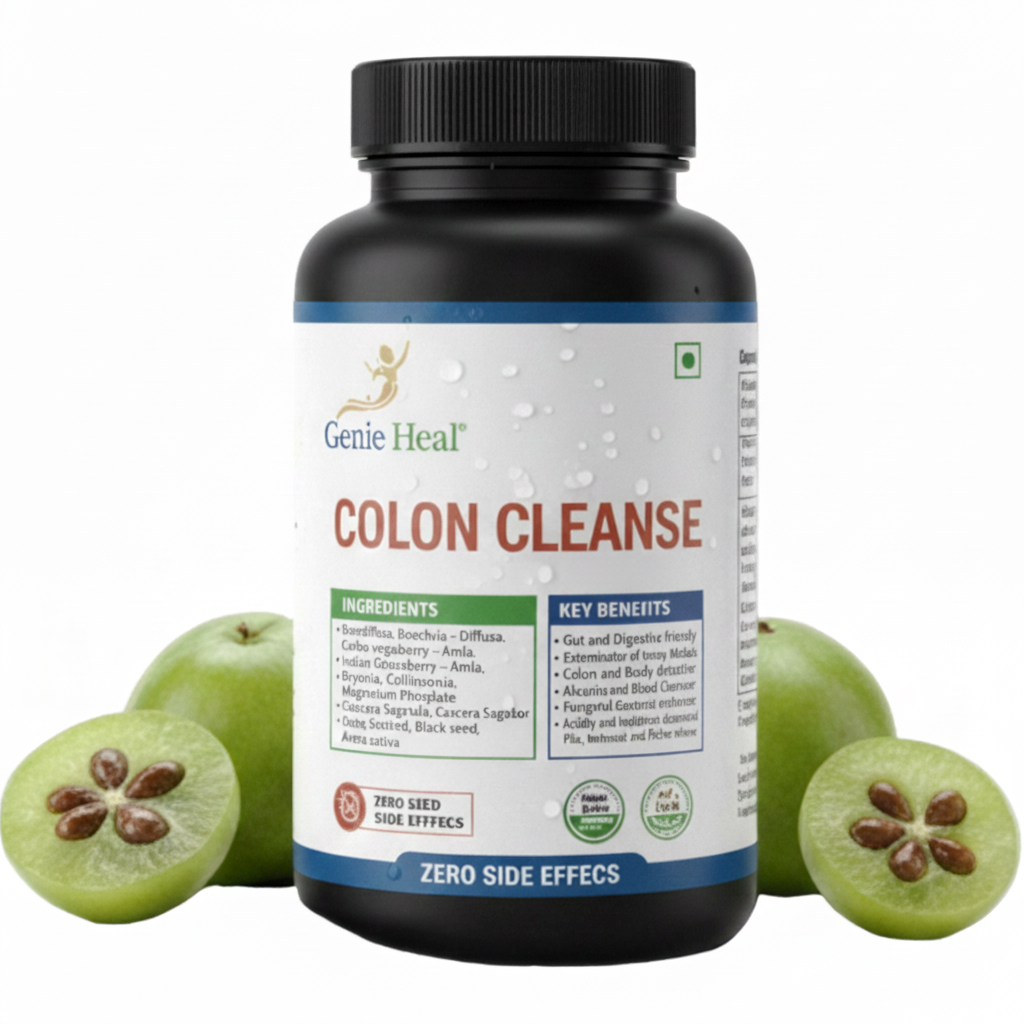
GenieHeal Colon Cleanse is sold as a plant-based herbal food supplement, not a medicine. It is vegan friendly and made for adults aged 18 and over. Each pack holds five capsules for a once-weekly routine over one month, priced at £24.99. We do not claim that it removes toxins or treats any condition. Its ingredient list includes Aloe Socotrina and Cascara Sagrada, which are the type of stimulant plants mentioned above. That is why the directions matter: take one capsule once a week with water, do not exceed the recommended dose, and speak to your doctor or pharmacist first if you are pregnant, breastfeeding, taking medication or have a medical condition. See the full ingredients on the GenieHeal Colon Cleanse page, our ingredients guide and the once-weekly routine guide. Orders over £99 ship free.
Frequently asked questions
What should I look for in a natural colon cleanse?
A full ingredient list, clear directions and duration, honest claims, and information on who should not use it. Check for stimulant laxative herbs.
Is a herbal colon cleanse the same as a traditional herbal medicine?
No. Some herbal products are food supplements. Registered traditional herbal medicines carry a THR mark or number.
Are aloe and cascara sagrada safe?
They act as stimulant laxatives and are meant for short-term use. Sources recommend following directions carefully and speaking to a professional if you are unsure.
Does GenieHeal Colon Cleanse remove toxins?
No. We do not make that claim. It is a herbal food supplement for adults, to be used as directed.
Sources
- NCCIH: Detoxes and cleanses: What you need to know
- GOV.UK: Apply for a traditional herbal registration (THR)
- BBC News: report on a UCL study of herbal supplement labels
- Memorial Sloan Kettering: FDA rules that aloe and cascara are not safe as stimulant laxatives
- NIH LiverTox: senna
Keep reading
- How can I support my digestive health naturally?
- Why is fibre important for digestive wellbeing?
- Do you need a colon cleanse? What the evidence says
GenieHeal products are food supplements, not medicines. They are not intended to diagnose, treat, cure or prevent any disease, and they should not replace a varied, balanced diet or medical advice. This article is general information, not medical advice. If you are worried about your health, speak to your GP or pharmacist.

GenieHeal
Questions about a product? Email info@genieheal.com.