How colon cleanse capsules, powders and teas differ, how they compare with the main types of laxative described by the NHS, and what to check before you choose.

Quick answer: Capsules, powders and teas are different formats, and what matters most is what is inside. Some contain bulk-forming fibre, others contain stimulant plants such as senna, aloe or cascara. Check the ingredients and directions, and speak to a pharmacist if you are unsure.
Last updated: 10 October 2026
At a glance
- Capsules: a fixed amount per dose, easy to follow directions
- Powders: mixed into water, often fibre-based
- Teas: dose is harder to control, often contain stimulant herbs
- Always: read the ingredients and drink plenty of fluid
Why the format is not the most important thing
People often compare formats first, but the active ingredients matter more. The NHS explains that there are four main types of laxative that work in different ways: bulk-forming, osmotic, poo-softening and stimulant. Bulk-forming ones take up to 3 days to work and stimulant ones take 6 to 12 hours. Colon cleanse products can overlap with some of these, depending on their ingredients.
Capsules
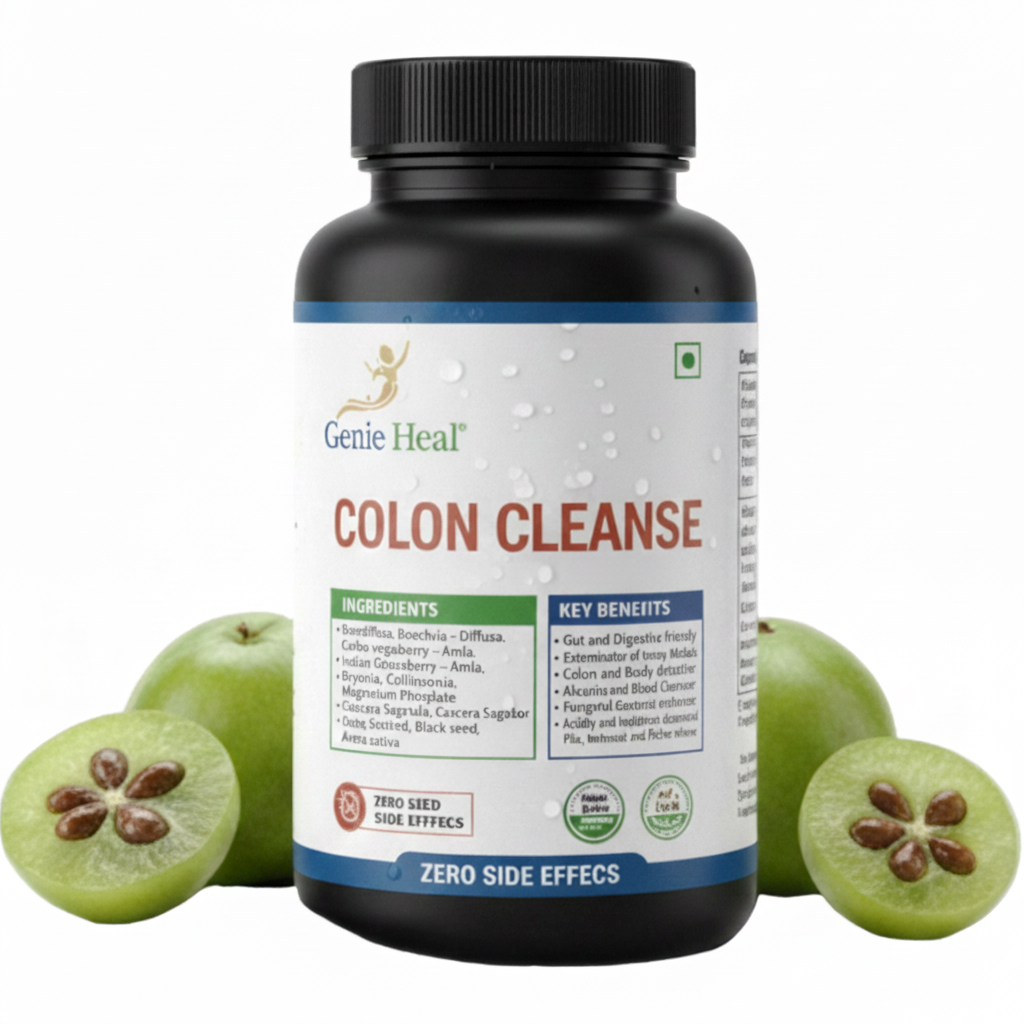
Capsules contain a set amount of ingredients, so it is easier to follow the directions and avoid taking too much. They are easy to swallow with water. The downside is that you cannot adjust the amount, and you need to check the label for what each capsule contains. GenieHeal Colon Cleanse is a capsule with one capsule a week for one month.
Powders
Powders are usually mixed into water or another drink. Fibre-based powders are the bulk-forming type described by the NHS, and they need plenty of fluid. Flavoured powders may contain sugar or sweeteners, so check the label.
Teas
Herbal teas for the bowel often contain stimulant herbs such as senna. The dose is hard to control because it depends on how strongly you brew the tea, and stimulant herbs are meant for short-term use only. NIH LiverTox recommends short-term use of senna, and regular use of stimulant products can cause problems.
What to check whatever the format
- The full ingredient list, including any stimulant plants such as senna, aloe or cascara.
- Directions and how long you can use it.
- Who should not use it.
- Honest claims. The US National Center for Complementary and Integrative Health says there is no convincing evidence that detox or cleansing programmes remove toxins.
- Fluid advice: the NHS says bulk-forming and osmotic laxatives need plenty of fluid.
See our 9-point checklist and guide to aloe and cascara sagrada.
When not to self-treat
If you are constipated for more than a few days, or your bowel habits have changed for more than three weeks, speak to your GP or pharmacist first. The NHS says to speak to a doctor or pharmacist if you have used a laxative for 3 days and it has not helped.
Frequently asked questions
Are capsules better than powders or teas?
Neither is automatically better. What matters is the ingredients, the directions and whether they suit you.
Do herbal teas contain laxatives?
Some contain stimulant herbs such as senna. Check the label and follow the directions.
Do I need fluids with a powder?
Yes. The NHS says bulk-forming laxatives need plenty of fluid.
Is a colon cleanse the same as a laxative?
Some products contain laxative-type ingredients, so check the label. Colon cleansing products are not proven to remove toxins.
Sources
Keep reading
- How to choose a herbal colon cleanse supplement
- What is a herbal digestive supplement?
- Do you need a colon cleanse? What the evidence says
Browse all GenieHeal herbal food supplements, learn about GenieHeal, or contact our team.
GenieHeal products are food supplements, not medicines. They are not intended to diagnose, treat, cure or prevent any disease, and they should not replace a varied, balanced diet or medical advice. This article is general information, not medical advice. If you are worried about your health, speak to your GP or pharmacist.

GenieHeal
Questions about a product? Email info@genieheal.com.